Head-to-Head Comparisons & Performance Tests
French Press Grind Coffee: Built-In Systems Tested
19th Mar•16 min read
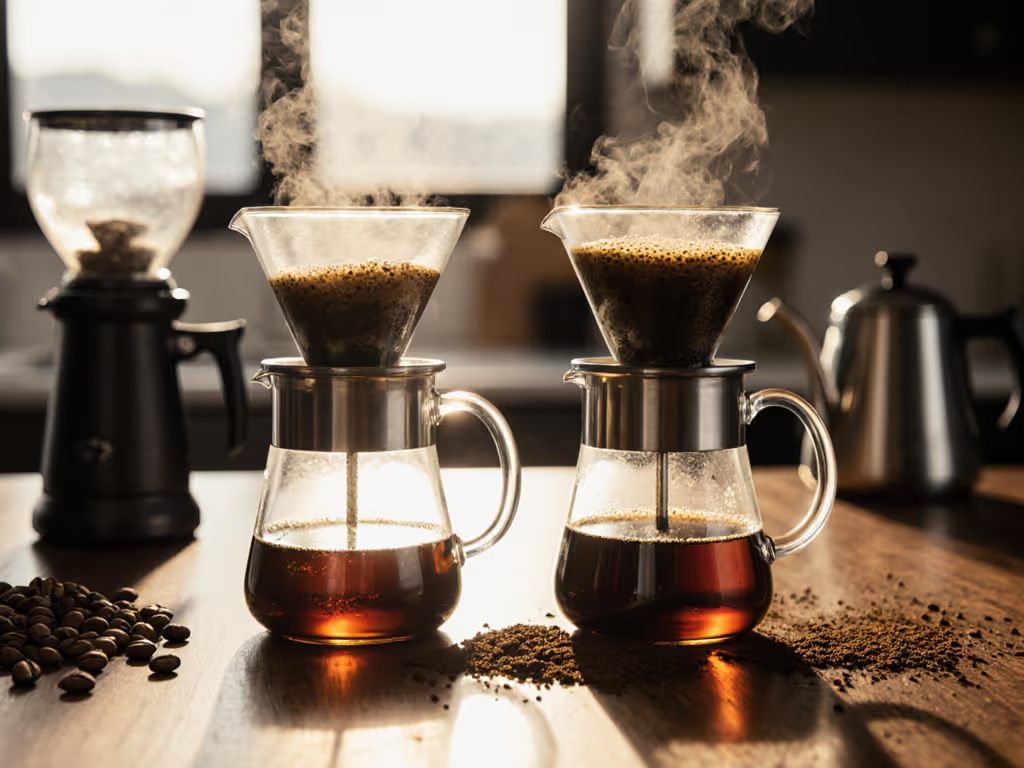
Let’s talk about the elephant in the room: that gritty layer at the bottom of your french press coffee press cup. For years, it's been the trade-off for immersion brewing's luscious body, the reason some swear off the modern french press entirely. But what if I told you sludge isn't inevitable? Today's redesigns paired with smarter technique can give you clean, articulate cups while preserving that velvety texture coffee lovers crave. For a step-by-step, see our French press sludge-free brewing guide. As someone who's helped hundreds of households dial in their presses, I've seen the 'aha' moment when muddy coffee transforms into something elegant. It starts with understanding how variables interact, not chasing magic gadgets. Baseline before tweaks.
That sandy mouthfeel usually comes from two culprits: filter gaps and fines migration. Traditional single-mesh filters have pores large enough for ultra-fine coffee particles ('fines') to slip through, especially with finer grinds. But here's what most reviews miss: grind size alone won't fix it. I once watched a friend adjust their grinder three clicks finer, then blame the press when sludge worsened, without considering water minerals or plunge speed. Let's break down the real fixes:
Newer presses like the Espro P7 (with its dual micro-mesh filters) reduce sediment by 80% compared to basic models, per industry filtration tests. Why? Their pores are 100-150 microns versus standard filters' 300+ microns. But you don't need to splurge, and many $30 presses now include tighter filters. Key question: Does your plunger seal snugly against the carafe walls? If coffee bypasses the filter (a silent sludge-maker), even premium filters fail. Test yours by pressing gently before pouring; if liquid gushes through gaps, replace worn gaskets.
Start with one knob, turn it slowly, taste on purpose.
Contrary to old advice, you can avoid sludge without sacrificing extraction. For most beans, a coarse grind (like sea salt) actually enhances clarity in immersion brewing. Try this experiment: brew two batches of washed-process Ethiopian with identical water and time. Batch A: standard coarse. Batch B: slightly coarser (one grinder step). Batch B will have less sediment and brighter citrus notes, thanks to faster extraction of delicate washed-process acids. With honey process immersion, that coarser grind prevents cloying sweetness from over-extracting sticky mucilage. It's about fines control, not just particle size.
Absolutely. Gear matters less than process awareness. Here's your baseline blueprint:
Tap water with <50mg/L calcium (common in soft-water areas) yields flat, thin coffee in French presses. For a deeper explanation of how minerals shape extraction and bitterness, read our water mineral balance guide. Too much mineral (>300mg/L) over-extracts bitterness. For balanced body and clarity:
Over-steeping amplifies sludge by breaking down grounds into fines. But under-steeping leaves washed-process coffees sour. Follow this:
| Mug Size | Coffee Dose | Water | Notes |
|---|---|---|---|
| Single (8oz) | 15g | 250ml | Use coarser grind; 4:30 max steep |
| Duo (16oz) | 30g | 500ml | Standard coarse grind |
| Group (34oz) | 50g | 850ml | Plunge in two stages to avoid agitation |
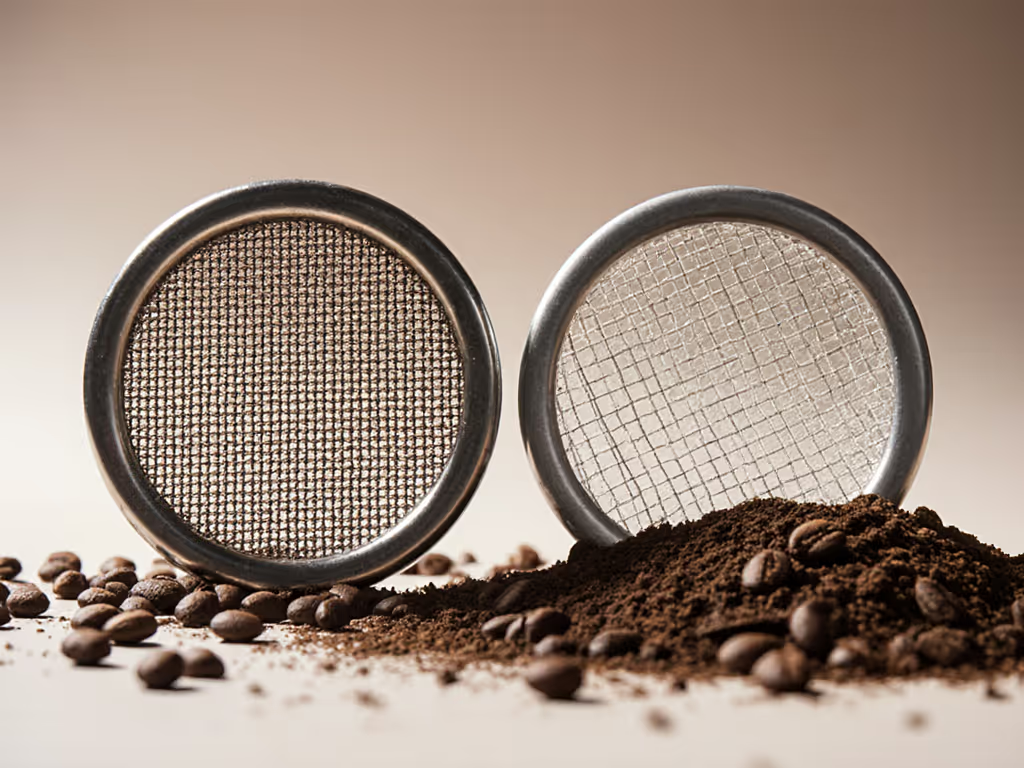
Great question! Many assume less sludge = thinner coffee. But body comes from oils and colloids, not sediment. Modern french press designs preserve these while blocking fines:
For anaerobic fermentation french press cups (which can taste metallic if under-extracted), this heat retention is non-negotiable. I've brewed the same anaerobic Geisha in glass vs. insulated steel: the steel version had silky body with zero 'funk' off-notes, while the glass version turned sharp and thin by cup two.
Sludge cleanup takes 20 seconds with this method:
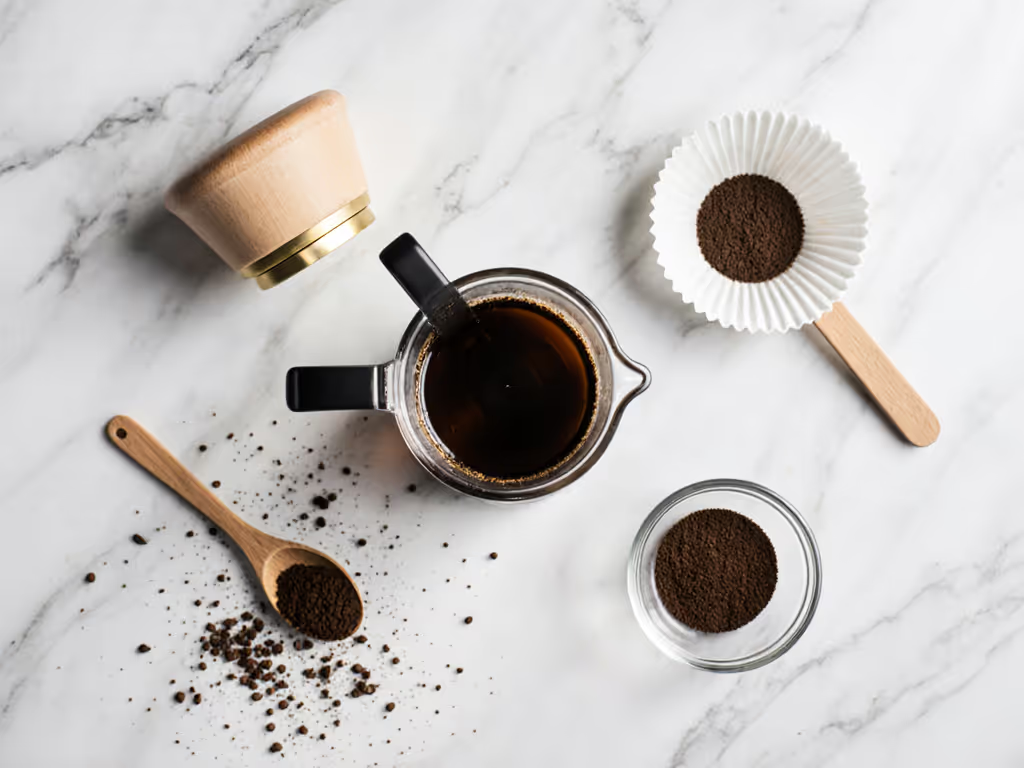
Stainless steel presses make this effortless, with no thermal shock cracks like glass. For camping or offices, skip the sink entirely: wipe filters with a damp cloth and air-dry. Pro tip: A weekly vinegar soak (1:4 vinegar:water) dissolves mineral buildup in micro-filters. See our comprehensive French press cleaning guide for disassembly tips and filter replacement steps.
Yes! Even basic presses shine with intentional tweaks. Last Tuesday, I helped a neuroscientist revive her decade-old Bodum:
Result? Her washed-process Kenyan went from 'muddy and sharp' to 'juicy with bergamot clarity.' She texted: 'I haven't tasted this bean properly in years.' That's the power of targeted adjustments over upgrades.
Pick one variable to test with your current press:
Write down one sensory descriptor per cup: 'chalky,' 'silky,' 'muted.' You'll spot patterns faster than any spec sheet.
The best modern french press isn't about the shiniest body or priciest filter, it's about constraints that simplify. When we limit variables (one grinder setting, one water profile), we hear the coffee's story clearly. That afternoon with my friend resetting their press? We didn't buy new gear. We brewed two cups, changed one thing, and finally tasted the sweet spot hiding in plain sight. Your perfect cup isn't waiting for an upgrade. It's waiting for your attention. So grab your press, pick one knob, and turn it slowly. Your cleaner, fuller coffee starts now.
Further Exploration