
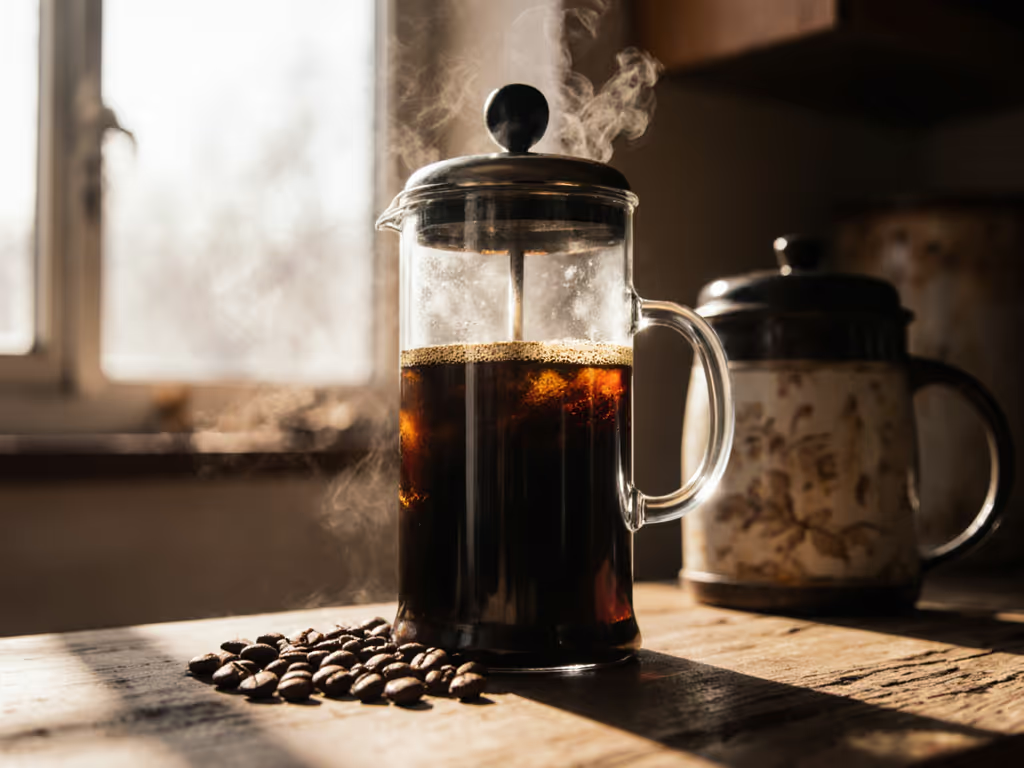
French Press Bloom Phase: Master Degassing for Cleaner Coffee
By Priya Deshmukh • 29th Oct
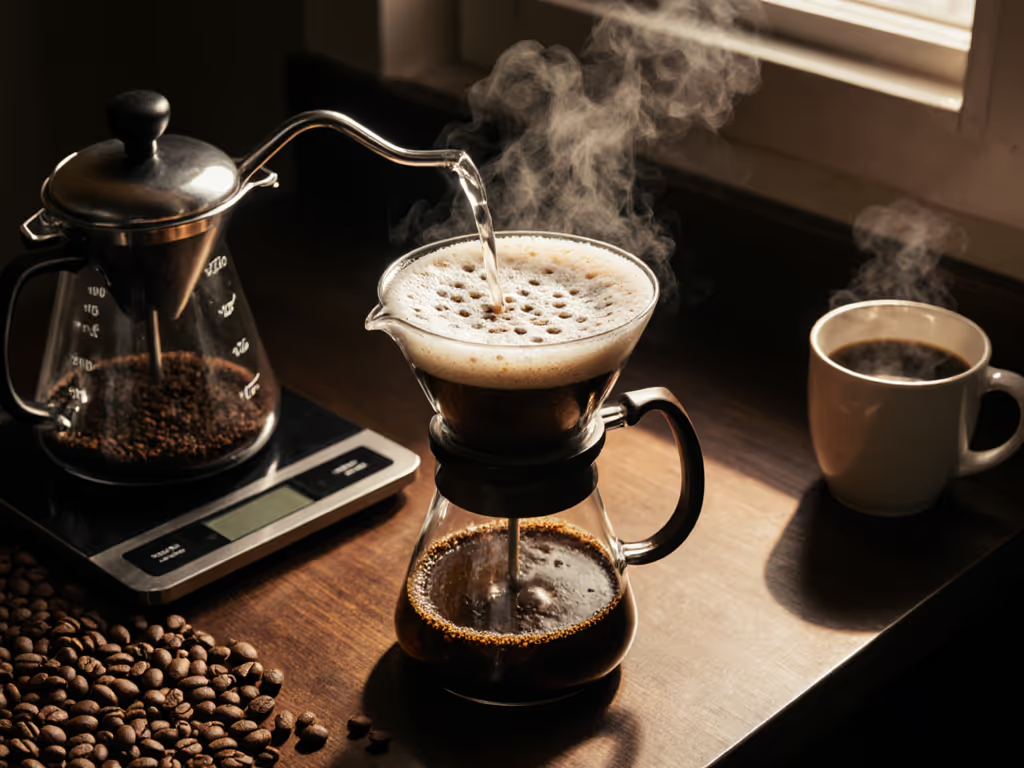
Let's talk about the secret handshake between french press coffee and freshness: the french press bloom phase. That brief moment when hot water first kisses freshly ground beans isn't just visual theater (it's where trapped carbon dioxide escapes), paving the way for cleaner extraction. Skip it, and you risk sour notes, muddy textures, or coffee that tastes like it's playing hide-and-seek with your palate. If you're troubleshooting the basics, our French press mistakes guide helps you avoid the common errors that cause sourness and sludge. The good news? Mastering coffee degassing takes just 30 seconds and zero extra gear. Today, we'll turn this often-overlooked step into your most reliable guardrail for consistent, cafe-quality immersion brewing (no guru mystique required).
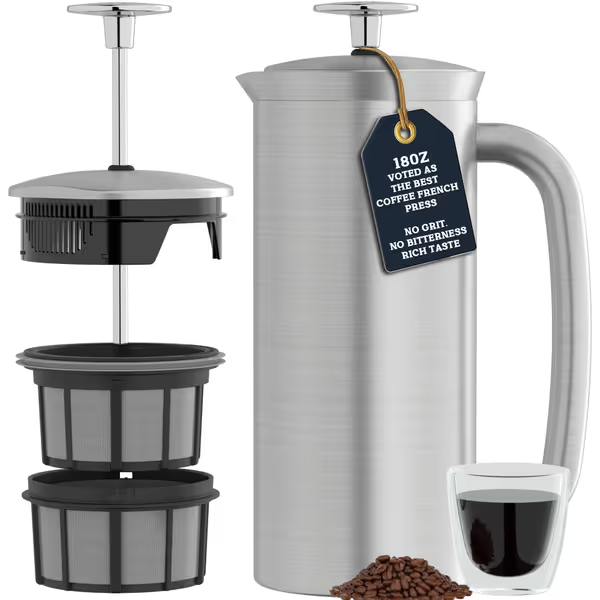
ESPRO P7 French Press
Smoother, grit-free coffee that stays hot longer.
$115
Capacity18 oz brewed coffee (27 oz water)
Capacity18 oz brewed coffee (27 oz water)
Pros
Double micro-mesh filter eliminates sludge and grit.
Double-walled stainless steel keeps coffee hot.
Cons
Some find it expensive for a French press.
Filter effectiveness on grounds debated by users.
Customers find this French press coffee maker makes excellent coffee with a rich taste, and appreciate its double-walled stainless steel insulation that keeps the brew warm for a long time. The filter system effectively strains grounds, and customers find it simple to clean. While some customers consider it well worth the money, others feel it's not worth the price tag. Customers disagree on how well the grounds are kept out of the coffee.
Customers find this French press coffee maker makes excellent coffee with a rich taste, and appreciate its double-walled stainless steel insulation that keeps the brew warm for a long time. The filter system effectively strains grounds, and customers find it simple to clean. While some customers consider it well worth the money, others feel it's not worth the price tag. Customers disagree on how well the grounds are kept out of the coffee.
Why Does My French Press Need a Bloom at All? (It's Not Just Bubbles)
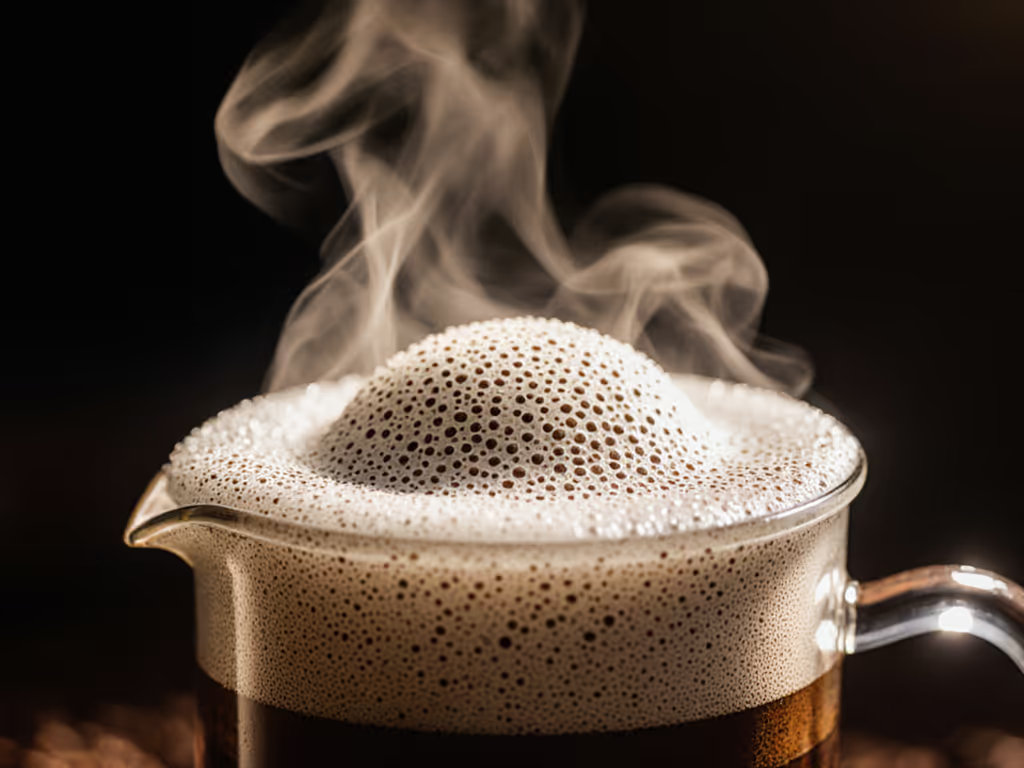
Behind the science: Right after roasting, coffee beans exhale carbon dioxide (CO2) for 2-3 weeks (a natural process called degassing). Grind those beans, and you accelerate gas release exponentially. When hot water hits, that trapped CO2 erupts in a foamy "bloom," which sounds cool but actually hinders extraction. Why? CO2 repels water like an oil slick, creating dry pockets in your grounds. The result? Uneven brewing: some bits sour (under-extracted), others bitter (over-extracted), and that signature immersion-body gets drowned out by sludge.
What the research confirms: Industry studies from the Specialty Coffee Association show properly bloomed coffee achieves 15-20% more consistent extraction. Translation? Sweeter acidity, nuanced fruit or chocolate notes, and (critically for french press lovers) less silty residue at the bottom of your mug.
Start with one knob, turn it slowly, taste on purpose.
"But My Coffee Isn't Fresh!" (When Bloom Matters and When It Doesn't)
- Bloom religiously: Beans roasted within 14 days (especially light/medium roasts). Look for vigorous bubbling (that's freshness talking).
- Skip it gently: Pre-ground coffee (most CO2 already escaped) or beans older than 4 weeks. Your brew won't suffer, but you won't gain much either.
- Pro tip: Store beans in airtight containers without degassing valves. Trapped CO2 actually preserves flavor (just release it properly during bloom).
How to Bloom French Press Coffee: A 4-Step Baseline (No Scale? No Problem)
Forget complexity. This is one-variable-at-a-time framing in action: adjust only bloom time while keeping everything else constant. You'll taste the difference in one brew.
Step 1: Weigh or Guess Your Coffee (Yes, Really)
Use 15g coffee per 225g water (≈1:15 ratio) for an 8oz mug. No scale? Heaping tablespoon = ~10g. Consistency starts here (note your "mug size baseline" in your phone).
Step 2: Hit Start, Then Add "Bloom Water"
Immediately after pouring grounds into your french press:
- Start your timer
- Pour just enough water to saturate the grounds (aim for 2x coffee weight (e.g., 30g water for 15g coffee))
Why 2x? This ratio fully wets the puck without over-diluting, accelerating CO2 release. Too little water? Incomplete degassing. Too much? You'll steep grounds prematurely.
Step 3: Wait 30-45 Seconds (Set a Timer!)
This is bloom time optimization in action. Watch for:
- Bubbling to slow significantly (≈70% subsided)
- Surface to flatten slightly as gases escape
Stir gently once at 20 seconds if grounds form a dry crust (this aids even saturation). No need to over-stir; turbulence isn't the goal.
Step 4: Proceed Like Normal (But Stir Once More)
Add remaining water, place lid with plunger pulled up, and stir one final time after 1 minute to break the crust. Then steep 4 more minutes. The bloom did the heavy lifting, and now extraction happens cleanly.
Why this works: By dedicating those 30 seconds solely to degassing, water penetrates evenly during full immersion. CO2 isn't repelling liquid (it's making space for flavors to shine). Result? Less bitterness, brighter acidity, and noticeably less sludge (thanks to complete saturation before steeping). For a hardware sidekick that further reduces sediment, see our single vs double filter test.
Troubleshooting Your Bloom: Why Your Coffee Still Tastes "Off"
"My Bloom is Weak" (Is My Coffee Stale?)
Likely culprit: Old beans or improper storage. Fresh beans always bloom vigorously. If bubbles are faint or nonexistent:
- Check roast date (ideal: 3-21 days post-roast)
- Verify storage (opaque, airtight container > freezer)
- Compare to a known-fresh bag (e.g., from a local roaster)
"I Bloomed, But My Coffee is Still Sour!"
Try this: Extend bloom time to 45 seconds. Dense beans (e.g., high-altitude African coffees) or very fine grinds may need extra CO2 release time. One change only (don't tweak grind or ratio yet).
"Help! My French Press is Extra Sludgy"
Solution: Pair bloom with a coarser grind. Immersion brewing science shows bloom reduces gas-induced inconsistencies, but grind size controls physical sludge. Aim for sea-salt texture. If using a press like the ESPRO P7 with double micro-filters, you'll notice even less sediment (proof that bloom + filtration combo is transformative).
Your Invitation: Run a 2-Brew Experiment (Yes, It's That Simple)
Last week, I watched a friend chase "perfect" french press by changing grind, dose, and bloom time simultaneously. When the cup tasted muddy, he blamed the press. We reset: same beans, same grinder setting, same water. One ratio. One bloom time. Taste notes written down. Brew #1: no bloom. Brew #2: 30-second bloom. The difference wasn't subtle, it was palpable. Cleaner body. Brighter citrus notes. Zero sludge paranoia.
Your turn: Tomorrow morning, brew two presses side-by-side:
- Control: Skip the bloom (just pour all water at once)
- Test: Use the 4-step method above
Taste immediately after plunging. Ask: "Which has clearer flavor? Less bitterness?"
This is mastery (not in expensive gear, but in deliberate experiments). You'll nail your sweet spot faster by isolating variables than by overhauling your entire routine.
Final Thought: Bloom as Your Daily Ritual Anchor
In our rush for efficiency, it's tempting to treat bloom as "optional." But those 30 seconds are the ultimate investment in immersion brewing science working for you. They transform french press from a "sometimes great, sometimes gritty" brewer into your most reliable morning anchor (weekdays or weekends). When you honor the gas, the coffee honors you back: with depth, clarity, and a cup that feels like it was made just for you.
Start small, taste big. Tomorrow's first pour is your lab. One bloom. One note. One step toward coffee that never lets you down.
Curious Where to Go Next?
- Try bloom time optimization with your favorite medium roast: compare 20s vs. 40s bloom (same everything else)
- Explore how water mineral content (aim for 150 mg/L) affects bloom vigor (soft water? Harder water?). Track changes in extraction
- Share your tasting notes with a coffee buddy. Often, naming one difference ("more caramel, less ash") sharpens your senses faster than solo brewing
P.S. Remember that friend who declared his press "inconsistent"? He now texts me photos of his 30-second bloom timer. Progress tastes delicious.
Related Articles
Brewing Guides & Techniques
French Press Sensory Evaluation: Home Cupping Protocol
11th Feb•5 min read