Modern French Press Evolution: Cleaner Coffee, Proven Design
By Priya Deshmukh • 20th Nov
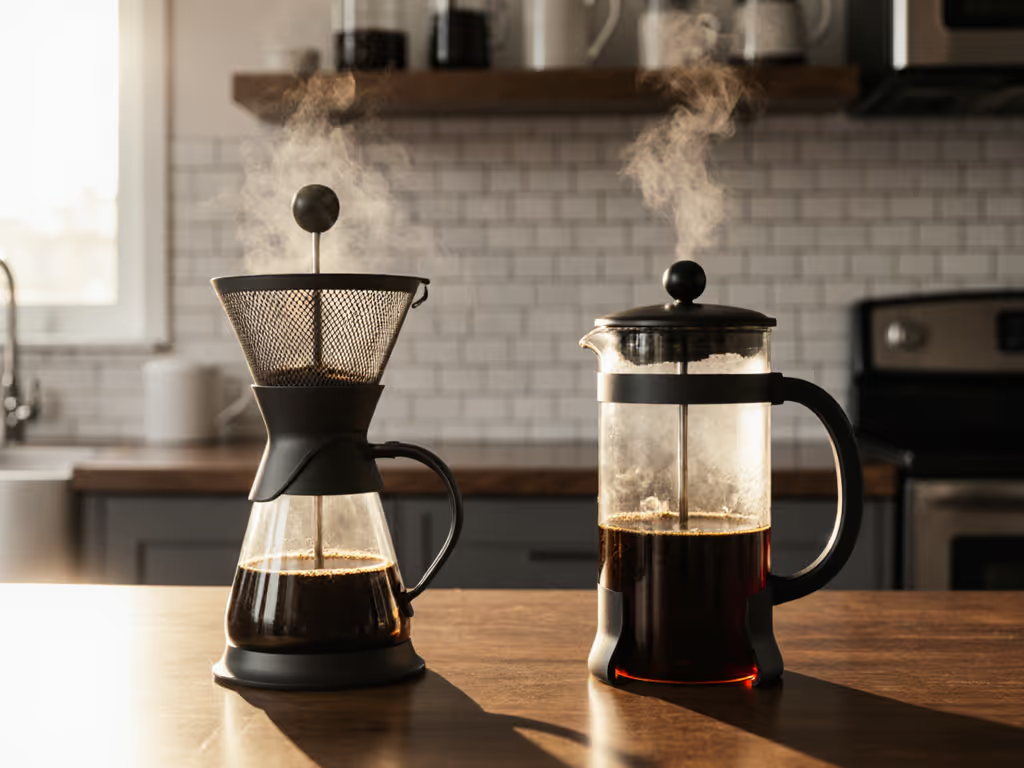
If you've ever poured a cup of French press coffee only to find gritty sludge at the bottom, you're not alone. But what if I told you your modern French press could deliver the full-bodied richness you love without the sediment? The evolution of this humble French press proves that sometimes the simplest solutions become classics for a reason, especially when thoughtful refinements build upon decades of proven design. Let's explore how today's French presses have evolved to solve those frustrating pain points while preserving what makes immersion brewing so special.
What's really changed in French press design since its invention?
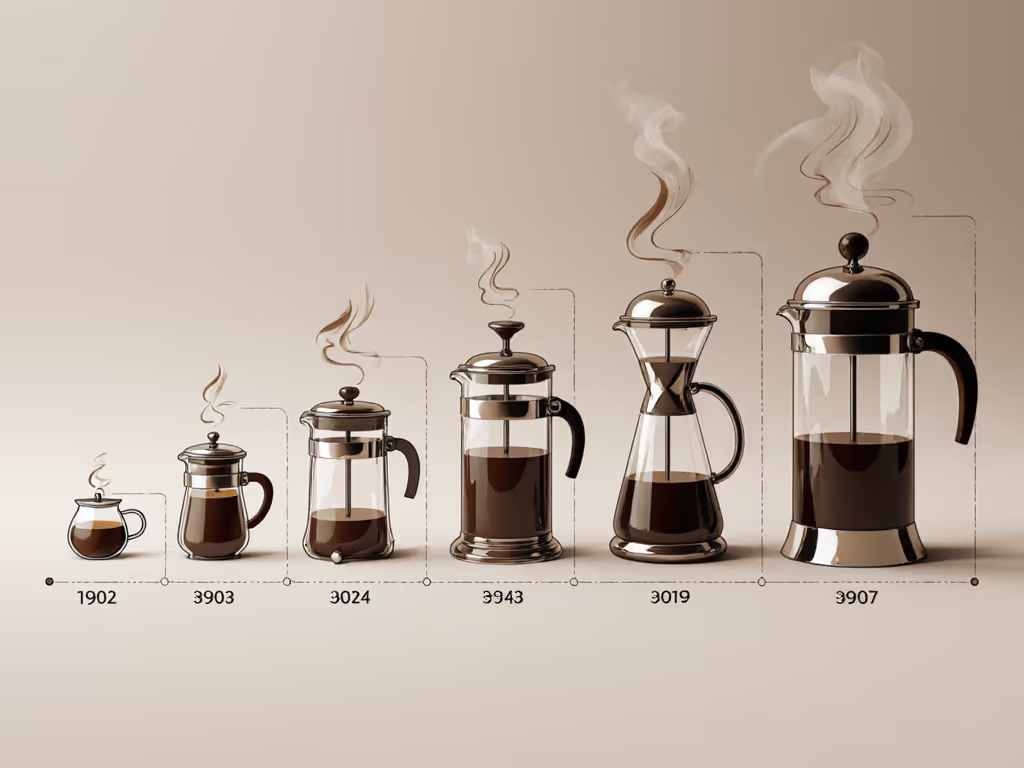
The beauty of French press history isn't in constant reinvention; it's in thoughtful refinement. The French press patent history begins with Mayer and Delforge's 1852 French design, which used a rudimentary metal frame and cheesecloth filter. But the real breakthrough came in 1929 when Italian designers Calimani and Moneta patented the first version with a spring-loaded metal mesh strainer that created a proper seal.
Modern coffee technology hasn't reinvented the wheel; it has optimized the essential mechanics. Today's most effective coffee maker iterations focus on three key areas: filtration precision (to eliminate sludge), thermal stability (to maintain temperature), and durable construction (for longevity). The core principle remains unchanged: full immersion of coffee grounds followed by gentle separation. What's evolved is how well that separation happens without compromising the oils and complexity immersion brewing captures.
How do modern French presses actually deliver cleaner coffee without losing body?
This is where recent material science makes a tangible difference. Older French presses often used single-layer mesh filters that let fine particles slip through, creating that dreaded sediment. Today's premium designs incorporate multi-stage filtration systems (think fine mesh within fine mesh) that catch silt while allowing those delightful coffee oils to pass through.
Start with one knob, turn it slowly, taste on purpose. This applies to your equipment choice too.
Take the physics of filtration: when water passes through smaller openings, fines get trapped while dissolved solids (the good flavor compounds) flow freely. Modern French presses like the stainless steel models with dual-filter systems create that sweet spot where you get all the aromatic depth immersion brewing provides without the gritty mouthfeel. The result? A cup that feels substantial yet clean on your palate (no more spooning sludge from the bottom of your mug).
Why do I still get inconsistent results even with a 'modern French press'?
Here's where technique meets equipment. I once watched a friend chase perfection by changing three things at once (grind, dose, and water), then declare the press inconsistent. We reset: one ratio, one grinder click, taste notes written down. Two brews later, their 'sweet spot' emerged. The hardware evolution helps, but mastery comes from small, deliberate adjustments and honest tasting notes.
Your path to consistency starts with these baselines:
- Grind size: Medium-coarse (like sea salt) for standard presses; slightly finer for double-filter models
- Water minerals: Aim for 120-150 mg/L total hardness (this unlocks brightness without harshness)
- Timing: 4 minutes immersion, then press slowly over 15-20 seconds
- Plunge depth: Stop just above the bed to avoid agitating fines
When you anchor sensory descriptors to specific actions, "brighter acidity when I grind one click finer," you transform guesswork into a repeatable system. Start small, taste big.
Do insulated French presses really keep coffee hot enough for meetings or lazy mornings?
Absolutely, and this is one of the most practical modern upgrades. Traditional glass carafes lose heat rapidly (about 15°F in the first 10 minutes), but double-walled stainless steel models maintain temperature within 5°F for over an hour. The physics is straightforward: vacuum insulation creates a barrier against thermal transfer, just like your favorite travel mug. For model-by-model data, see our heat retention face-off comparing the best insulated French presses.
For office or home use where coffee sits while you prep breakfast or join a meeting, this matters. One engineer client of mine tracks temperature decay with her thermometer-equipped kettle; she confirmed her insulated press kept coffee above 140°F for 75 minutes versus 35 minutes with glass. That's the difference between lukewarm regret and hot satisfaction when you finally take that second sip.
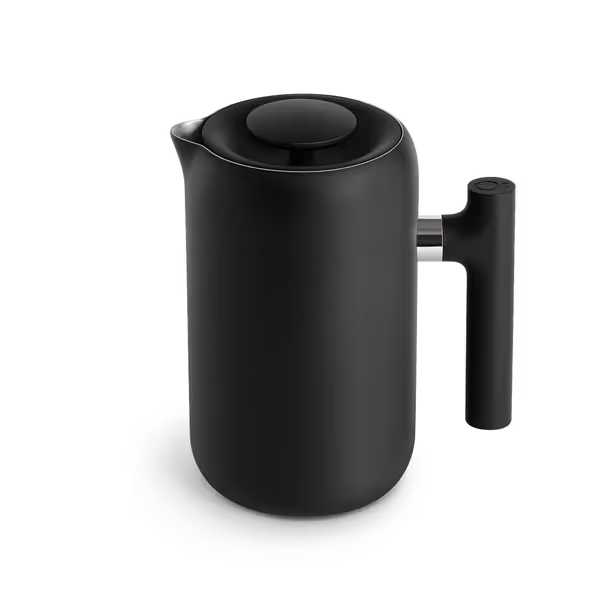
Fellow Clara Insulated Coffee Maker
Repeatable, clean French press coffee with exceptional thermal performance.
$84.95
Capacity24 oz Carafe
Capacity24 oz Carafe
Pros
Enhanced filtration for silt-free, full-bodied coffee.
Insulated stainless steel maintains perfect temperature.
Cons
Durability reports are mixed regarding the handle.
Higher price point compared to basic models.
Customers praise this French press coffee maker for its excellent coffee quality, beautiful design, and functionality, particularly noting its improved plunger mechanism. The product effectively keeps coffee hot throughout the day, is easy to clean, and excels at filtering out grounds. Durability receives mixed feedback - while some find it durable, others report the handle snapping off. Value for money opinions are divided, with some finding it worth the price while others consider it expensive.
Customers praise this French press coffee maker for its excellent coffee quality, beautiful design, and functionality, particularly noting its improved plunger mechanism. The product effectively keeps coffee hot throughout the day, is easy to clean, and excels at filtering out grounds. Durability receives mixed feedback - while some find it durable, others report the handle snapping off. Value for money opinions are divided, with some finding it worth the price while others consider it expensive.
What's the single most impactful tweak for cleaner cups with any French press?
It's not gear; it's your plunge technique. Most people plunge too aggressively, forcing fines through the filter. Instead:
- Pour hot water (200°F) evenly over grounds
- Let bloom for 30 seconds
- Complete pour to desired water line
- At 4:00, press slowly with steady pressure
- Stop plunging when you feel resistance from the bed
- Pour immediately to prevent over-extraction
This one-variable-at-a-time approach to technique creates more impact than any filter upgrade. I've seen this single adjustment transform muddy cups into clean, articulate brews (even in older presses with basic filters). Remember: the French press doesn't make coffee; it facilitates your process. Master the motion, and you'll taste the difference immediately.
How do I scale French press brewing for different serving sizes without relearning everything?
The good news is that immersion brewing scales beautifully with straightforward ratios. Forget complicated math: here are baseline recipes for mug sizes that work across most presses:
- Single mug (12oz): 24g coffee + 360g water (1:15)
- Office carafe (20oz): 40g coffee + 600g water (1:15)
- Weekend host (34oz): 68g coffee + 1020g water (1:15)
The key is maintaining that same coffee-to-water relationship regardless of vessel size. For exact measurements and troubleshooting by batch size, use our French press coffee ratio guide. For thermal stability, preheat your press with hot water first (this matters more for larger batches where metal walls absorb more initial heat). When hosting, I recommend using a separate insulated server for serving; keep the press itself for brewing only to maintain optimal temperature during immersion.
Where does modern French press technology go from here?
The most promising innovations focus on user experience rather than complexity. We're seeing thoughtful details like:
- Non-stick interiors that repel coffee oils (reducing rancidity between cleanings)
- All-directional pour spouts that prevent drips without precise alignment
- Ergonomic handles that stay cool during extended pours
- Modular components where filters and plungers are easily replaceable If repairability matters, our modular French press guide breaks down long-term costs and parts availability.
These aren't gimmicks; they solve actual pain points like cleanup time and inconsistent pours. The best designs honor what works while discreetly addressing friction points. After all, the French press endures because it's fundamentally sound; modern iterations simply make that soundness accessible to more people in more contexts.
The next time you brew, try this experiment: change just one variable (grind size, water temperature, or plunge speed), take notes, and repeat. You'll discover that the most sophisticated modern coffee technology was inside you all along: your ability to observe, adjust, and refine. Start small, taste big, and enjoy the evolution in your cup.
Related Articles
Basics, Care & Context
French Press Coffee Neurochemistry: Brain Benefits Explained
17th Jan•5 min read
Basics, Care & Context
French Press Coffee: Maximize Antioxidants, Minimize Sludge
11th Dec•6 min read